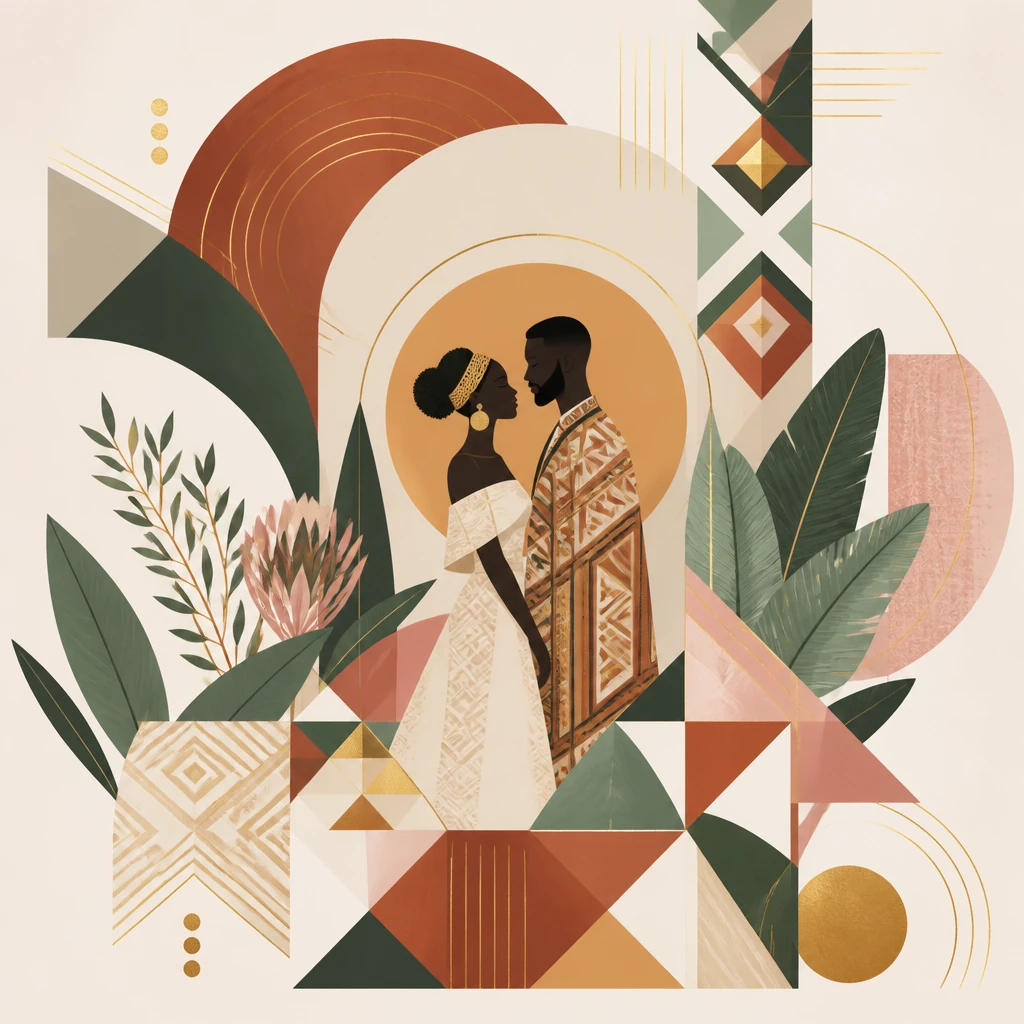
Modern African Wedding Invitation Ideas: Fresh Formats for a New Generation
The New Invitation Is Not a Card
For most of history, a wedding invitation was a card: paper, ink, envelope. It announced, it honoured, and it was filed away. Today, a new generation of African couples is reinventing the invitation entirely — not by discarding tradition, but by giving it new vessels.
A modern African wedding invitation might be a short film, an interactive page, a WhatsApp message that unfolds into a miniature website, or a printed card that looks like a fashion poster. It might carry music, motion, maps, and a built-in RSVP. It might reach five hundred guests in five minutes and be updated in the same time. This guide explores the formats, design directions, and craft principles of the modern African invitation — with the constant reminder that "modern" and "heritage" are partners, not opposites.
Why Modern Formats Fit African Weddings
Three realities make modern invitation formats a natural fit:
1. The scale. African weddings often have guest lists in the hundreds, spread across cities, countries, and continents. Digital formats scale without cost.
2. The communication culture. WhatsApp and other messaging platforms are where families already live. An invitation that arrives as a link in a familiar chat is native, not alien.
3. The multi-event structure. The traditional ceremony, the religious ceremony, and the reception need a schedule, not just a date. Modern formats carry the whole story.
None of this abandons tradition — in fact, modern formats give tradition new reach. The ruracio, the knocking ceremony, the engagement rites, the blessings — these can now be explained, celebrated, and scheduled for an audience that spans the globe.
Format One: The Video Invitation
A short film — thirty seconds to two minutes — is the most emotionally powerful modern format. The couple speaks to the camera or narrates over footage: the proposal, the places that matter, the faces of family. Music carries the mood.
Craft notes:
- Keep it short. Ninety seconds is plenty. Attention is precious.
- Shoot for the phone. Most guests will watch on a small screen; frame for vertical or square.
- Sound matters. Choose music that means something to you — a song from your courtship, a traditional melody — and ensure dialogue is clear.
- Include the essentials on screen. Names, date, and venue must appear in text, even if the viewer watches silently.
- End with the action. "Tap the link to RSVP" — and make the link real.
Format Two: The Interactive Invitation Page
The full web invitation — a page that unfolds as guests scroll: your story, the events with maps, the dress code, the RSVP button, the registry. This is the workhorse of modern invitations, and for good reason: it does everything.
Craft notes:
- Structure the scroll. Hero (names, date, photo) → story → events → practical details → RSVP → registry.
- Motion, used lightly. A gentle fade-in, a subtle parallax on the hero. Motion should guide, not perform.
- Mobile-first. Design for the phone; delight on desktop.
- Make RSVP unmissable. A button in the hero, a button after every section, a full RSVP page.
- Keep it fast. Compressed images, minimal scripts. Guests on slow connections must not wait.
Format Three: The WhatsApp-First Invitation
Because so many African weddings communicate through WhatsApp, the most "native" modern invitation is built for it: a warm message, a beautiful card image, and a link to the full page — all opening seamlessly inside WhatsApp.
Craft notes:
- The message does the greeting. "With joy in our hearts, we invite you..." — the link follows the warmth.
- The card image does the wow. A designed image that works as a save-the-date or the announcement.
- The page does the work. RSVP, maps, schedule, registry.
- Voice notes for elders. A personal voice message alongside the link is the modern equivalent of a hand-delivered card — technology with warmth.
Format Four: The Bold Typographic Invitation
Typography-led design is one of the strongest modern directions: no patterns, no photos — just words, arranged with confidence. A huge, elegant rendering of your names. The date in a monumental numeral. The venue set like a poster.
Craft notes:
- Commission the lettering. An African type designer or lettering artist can create something no template can.
- Choose the words with care. The message becomes the design; every word earns its place.
- Let the hierarchy sing. Names, date, venue — each with its own scale and rhythm.
- Colour discipline. One or two colours; the typography carries the design.
- Carry it across formats. The same typographic system on the card, the page, and the signage makes the wedding feel designed as one world.
Format Five: The Heritage Remix
The most culturally significant modern direction: take a traditional element and present it in a contemporary frame.
- The traditional greeting in a modern typeface, huge on the hero.
- A community textile pattern, extracted and modernised into a geometric system for buttons, borders, and dividers.
- The attire of the traditional ceremony photographed in a contemporary editorial style.
- The traditional ceremony's items — the calabash, the stool, the specific gifts — photographed as fine art and used as design motifs.
The heritage remix works because it respects the source material while translating it for a new generation. The key is intention: know what the element means, use it correctly, and let the design serve the meaning.
Format Six: The Editorial Invitation
Invitation as magazine spread: a bold headline ("We're Getting Married"), a strong photograph, short confident copy, and a refined layout. This style is beloved by modern couples for its energy and its honesty.
Craft notes:
- One strong image, treated like a magazine cover.
- Short copy with personality. "Two families, one celebration. Join us."
- Clean grids and disciplined typography.
- A playful detail — a QR code styled as a design element, a hidden message, a pull-quote from the proposal.
Format Seven: The Interactive Keepsake
Turn the invitation into an experience guests return to:
- A guestbook where guests leave messages — written or voice.
- A countdown to the first event.
- A poll: "Vote for the first dance song."
- A map of the wedding weekend, with the venues and their stories.
- After the wedding, the same link becomes the gallery and the thank-you.
The interactive keepsake is the format that most clearly shows guests the invitation is not a notice — it is the beginning of the celebration.
Design Principles for Modern African Invitations
Whatever the format, these principles keep the design strong:
Heritage With Intention Modern does not mean generic. Reference your actual traditions — the colours, the greeting, the textile, the ceremony — with the same care a traditionalist would demand. Specificity is the difference between "modern African" and "modern anywhere."
Clarity Over Cleverness The date, time, and venue must survive any design choice. Test the invitation with someone who has never seen it; if they cannot find the essentials in three seconds, redesign.
Phone-First Everything Most guests will experience the invitation on a phone. Design for it, test on it, and remember that slow connections are the reality for many guests.
One World, Consistent Design The card, the page, the website, the order of service, the signage — one design language. Guests should feel the wedding is one cohesive world from invitation to reception.
Motion With Meaning Animation, video, and sound are modern gifts. Use them where they add emotion or clarity, and skip them where they only add weight.
Building a Modern Invitation
The practical build should take hours, not weeks. A platform like My Joyfullday gives you the modern foundation — custom event websites, creation through WhatsApp and the Clara assistant, RSVP tracking, maps, registries, schedules, themes, photos, and editable colours and typography — so you can concentrate on the design and the story rather than the plumbing.
If you work with designers, brief them with this guide in hand: choose a format, agree the design direction, confirm what is included, and test everything on a phone before the send.
The Blend That Most Couples Choose
In practice, most modern African couples do not choose one format — they blend:
- A save-the-date as a designed card image or short video, sent early.
- The full invitation as an interactive page, sent six to ten weeks before the wedding, with the schedule, maps, and RSVP.
- A printed keepsake batch for elders and family.
- WhatsApp groups and voice notes as the warm human channel around all of it.
This blend is the essence of the modern African wedding: technology carrying tradition, innovation serving community.
Checklist: A Modern Invitation in a Weekend
The modern formats above should not take weeks. If you are building this weekend:
- [ ] Friday evening: Answer three questions — tone, traditions, audience. Choose one leading format and one heritage element.
- [ ] Saturday morning: Gather two or three photos, the confirmed event details, and the wording. Fill a one-page brief before opening any tool.
- [ ] Saturday afternoon: Build the page — hero with names and date, story, events with maps, RSVP, registry, FAQ. Apply the palette and the single textile accent.
- [ ] Saturday evening: Test on your own phone, on mobile data, and on a friend's older phone. Verify every map, date, and time.
- [ ] Sunday: Send to the family first, then the general list, with a warm message and a voice note for the elders. Schedule the reminder waves.
The two-day rhythm works because modern platforms carry the plumbing — your energy goes to the story and the design, not the assembly.
Three Blends Worth Stealing
Most couples combine formats rather than choosing one. Three patterns recur at real weddings:
The Video Opener. A ninety-second video invitation leads; the interactive page follows with the schedule, RSVP, and registry; a printed batch honours the elders. The video does the emotion, the page does the work, the card does the ceremony.
The Typographic Statement. No video, no photos — a typography-led card and page, with a heritage greeting set large. One bold idea, executed with discipline. Ideal for couples whose identity is design itself.
The Heritage Remix. A traditional element — the greeting, the textile, the ceremony items — presented in a contemporary frame across every format. The most culturally significant blend, and the one that travels best between generations.
Steal the structure, replace the details with your own, and the format becomes yours.
Frequently Asked Questions
| Are modern digital invitations disrespectful to tradition? | No — they carry tradition further. The respect lives in the content: the greetings, the ceremonies, the family involvement. Modern formats simply deliver that content to more people, more reliably. |
|---|---|
| What is the best modern format for a large guest list? | The interactive invitation page, sent via WhatsApp: one link, full schedule, built-in RSVP, instant updates. Add printed cards for elders and keepsakes. |
| Can a video invitation work on slow connections? | Yes, if you compress it well, keep it short, and always include the key details in text as well. Offer the video, but never make the essentials depend on it. |
| How do I keep heritage in a modern design? | Choose one or two specific elements — a greeting, a textile, a colour, a ceremony detail — and present them with intention and respect. Specific heritage, modern frame. |
| Should the invitation match the wedding website? | Yes. One design language across card, page, website, and signage makes the wedding feel designed as a whole. Guests notice the coherence even when they cannot name it. |