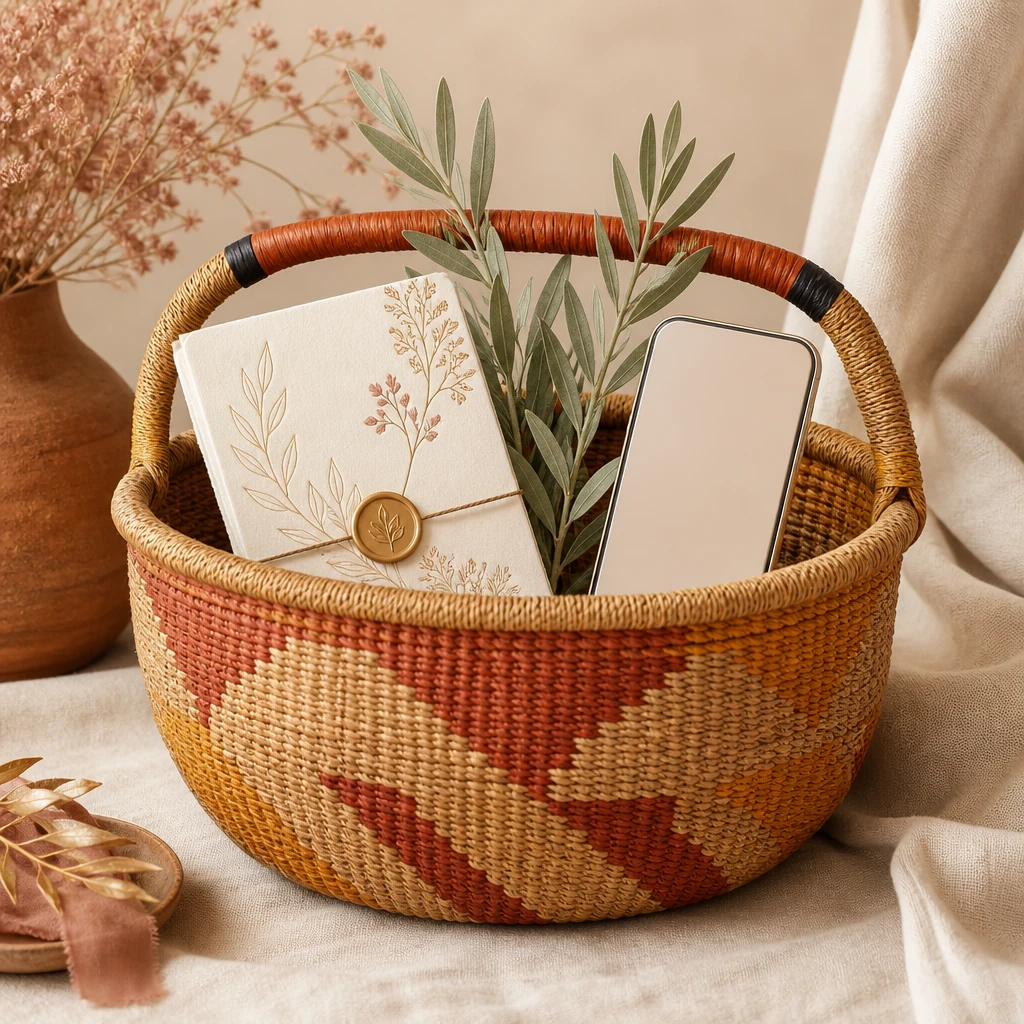
Traditional vs Modern Wedding Invitations in Kenya: Finding the Right Blend
Two Ways of Saying the Same Beautiful Thing
Every Kenyan wedding invitation, in any format, says the same thing: "You matter to us, and we want you with us on the most important day of our lives." The traditional printed card and the modern digital invitation are two dialects of that single sentence — and most Kenyan weddings speak both.
This guide compares the two honestly: what each offers, what each costs in money and effort, where each shines, and where each falls short. More importantly, it explores the blend — because in Kenya, the question is rarely "which one?" and almost always "how much of each?"
The Traditional Invitation: What It Carries
The printed invitation card is one of the most enduring artefacts of Kenyan wedding culture. For generations, it has been the formal announcement, the keepsake, and the sign of respect.
Its Strengths
It is an object. The weight of the paper, the texture, the envelope, the careful handwriting — these speak a language of effort and care that no screen can fully match. A card lives in a drawer, a handbag, or an album for decades. Grandparents treasure them; children find them in boxes.
It carries formality. There is a ceremony to receiving a card: it is addressed to you by name, it is delivered, it is opened. That ceremony matters, especially to elders who grew up in a world where the card was the only invitation.
It is universal. A printed card needs no phone, no internet, no battery. It works for every guest, every age, every situation.
It is a design canvas. Paper invites craft: foiling, embossing, letterpress, deckled edges, textured stock. Some Kenyan printed invitations are genuinely works of art.
Its Challenges
It is expensive at scale. Guest lists in the hundreds multiply the per-card costs of printing, envelopes, inserts, and delivery.
It is frozen. The date printed is the date that must happen. A change means a reprint, at full cost.
It is slow. Design rounds, printing turnaround, assembly, addressing, and delivery take weeks — and international delivery to diaspora guests even longer.
It is one-way. The card announces; it does not collect. RSVPs still come by phone, message, and word of mouth.
The Modern Invitation: What It Carries
The digital invitation is the newcomer that has rapidly become a default — and its strengths mirror the printed card's weaknesses.
Its Strengths
It scales for free. Whether the list has fifty guests or five hundred, the send is one link. No per-card cost.
It is alive. Details can be updated after sending; guests with the link always see the current truth. Venue moved? Updated in minutes, not reprinted in weeks.
It is instant. The invitation travels to Nairobi, Kisumu, Mombasa, and the diaspora in the same second it is sent.
It carries everything. The schedule of the traditional ceremony, the church service, and the reception; maps; dress codes; travel notes; the registry — all in one page guests can revisit.
It manages the list. Built-in RSVP tracking counts responses, sends reminders, and hands the caterer exact numbers. For a large Kenyan wedding, this is the difference between a calm week and a chaotic one.
It moves. Video invitations, music, scrolling pages — the modern invitation can carry emotion in ways paper cannot.
Its Challenges
It is not an object. A link does not sit in a drawer. The keepsake quality is different — it must be deliberately made (a gallery page, a saved video) rather than naturally felt.
It excludes some guests. Elders without smartphones, areas without internet, guests who prefer paper: the digital invitation must be supplemented for them.
It can feel impersonal in careless hands. A bare link with no message is a cold invitation. The warmth is the sender's responsibility.
It depends on technology. Links break, phones change, platforms close. The digital invitation needs the couple's attention to its upkeep.
The Real Comparison: Money, Time, and Feeling
Money
Printed invitations cost per card and per finish; at scale, they dominate the invitation budget. Digital invitations cost a platform or designer fee regardless of guest count — usually far less at Kenyan scale. The hybrid (digital for the crowd, printed for elders) gives most of the value at a fraction of the full-print cost.
Time
Printed invitations consume weeks of calendar time and hours of assembly. Digital invitations consume an afternoon of building and minutes of sending. Time is the resource Kenyan couples run out of first.
Feeling
The printed card carries effort, ceremony, and keepsake. The digital invitation carries immediacy, interactivity, and reach. Neither feeling is superior; they are different gifts.
Where Each Belongs: The Practical Map
Printed Cards Shine When:
- The guest is an elder who values formality and keepsakes.
- The wedding is intimate — fifty guests where the card is the centrepiece.
- The design is the art — foil, embossing, a card so beautiful it is framed.
- The guests are local and the timeline is generous.
- The couple wants a physical record for their children and families.
Digital Invitations Shine When:
- The guest list is large and spread across counties and countries.
- The wedding has multiple events needing a schedule and maps.
- RSVP volume demands automation.
- Plans are still moving and details need to be updatable.
- The diaspora must be reached instantly.
The Kenyan Blend: What Most Couples Actually Do
The patterns below are what you will recognise at real Kenyan weddings — none is "correct", but all are common and workable:
The Full Digital Plus Printed Keepsakes Digital invitations to the entire list; a small printed batch for parents, grandparents, and the couple's own album. Respectful, efficient, and the most common modern pattern.
The Elder Honour Blend Digital for the general list; personally delivered printed cards for elders and family pillars. The card becomes a sign of particular honour, not a mass product.
The Ceremony Split Digital for the reception and church events; printed (or family-word-of-mouth) for the traditional ceremony, which in many communities is organised through family structures and does not follow invitation-card etiquette at all.
The Full Traditional Entirely printed, for couples and families who want the classic experience end to end. More costly and slower, but genuinely beautiful when done well.
The Full Digital Entirely digital, for small modern weddings or guest lists that are entirely connected. Requires care for the few guests who need help.
How to Choose Your Blend
Ask four questions:
1. Who is on the list, and where are they? Elders and local guests welcome cards; diaspora and scattered guests need digital speed.
2. What does the wedding cost in time? If the wedding is soon, digital carries the urgency; print needs runway.
3. What do the families expect? The traditional ceremony's etiquette and the families' wishes outweigh any fashion. Ask early.
4. What do you want to keep? If you want a physical record of the wedding in your home and your parents' homes, print a batch — even a small one — no matter how digital the main send is.
Making the Blend Beautiful
A blended approach is only beautiful if it is coherent:
- One design language. The printed card and the digital invitation should share colours, typography, and motifs. Guests should feel they received the same invitation in two media.
- One source of truth. The digital page carries the full, current schedule; the printed card carries the essentials. If details change, the card says "see the link for updates."
- One timing. Send both at the same time where possible, so no guest feels second-class.
- One tone. The warmth of the message should match across media — a bare link beside a formal card is jarring; a warm message beside a card is natural.
Tools for the Modern Side of the Blend
If you are building the digital side, platforms like My Joyfullday handle the heavy lifting: custom event websites, creation through WhatsApp and the Clara assistant, RSVP tracking, maps, registries, schedules, themes, photos, and editable colours and typography. The printed side then becomes what it does best — a small, beautiful, honoured artefact — while the digital side does the logistics.
The Comparison at a Glance
| Dimension | Traditional card | Modern digital |
|---|---|---|
| Saying "we honour you" | Effort made visible | Reach made personal |
| Corrections | Reprint at full cost | Instant update |
| RSVPs | Phone, message, word of mouth | Dashboard, reminders, exports |
| Keepsake | Object in the drawer | Living page and gallery |
| The unconnected guest | Always works | Needs a bridge |
| Design canvas | Paper craft — foil, embossing | Motion, video, interactivity |
Neither column is "better"; each is a set of strengths. The blend chooses strengths from both.
The Family Conversation: How to Raise the Question
Bringing up invitations with families can feel delicate — especially when tradition and technology seem to collide. The conversation goes better with this shape:
Start with respect, not the format. "We want the invitation to honour you and everyone who matters to us — let us think together about how."
Show, then ask. Share a draft of the digital invitation and a sample printed card side by side. Families respond to what they can see, not to abstractions.
Name the practical facts gently. "With 400 guests and family in three countries, the link reaches everyone at once — and we will still have beautiful cards for the elders."
Offer the honoured middle path. "Full cards for the family pillars, digital for the wider list, one design throughout." Most families find this easier to accept than either extreme.
Give the final word to the families. Where the traditional ceremony is concerned, its protocol may already have answers. Let the families decide how that ceremony is announced; the digital side can carry the logistics either way.
The invitation question, handled this way, becomes another moment of family cooperation rather than a tug-of-war.
Frequently Asked Questions
| Is it disrespectful to send a digital invitation to elders? | Not by itself — many elders happily use WhatsApp. The respect is in the delivery: a personal call or voice note alongside the link, or a printed card for those who value one. Know your elders and honour them individually. |
|---|---|
| Do I need both printed and digital invitations? | No. Many couples run fully digital. But the hybrid — digital for the crowd, a small printed batch for keepsakes and honoured guests — is a common and elegant middle path. |
| What should stay on the printed card if I also have a digital page? | The essentials: names, date, the main venue, and a line pointing to the link for the full schedule and RSVP. The card is the symbol; the page is the substance. |
| How do I keep the two styles consistent? | Share one design system — colours, fonts, motifs — across both. If a designer does the card, ask for the digital styling too, or choose a platform where you can match colours and typography yourself. |
| Which is cheaper in Kenya? | At scale, digital is dramatically cheaper because there is no per-card cost. A small printed batch for elders and keepsakes keeps the traditional value without the full print bill. Compare what each actually includes before deciding. |