Wedding Website Ideas for Kenyan Couples: 12 Inspirations That Feel Like Home
What a Great Kenyan Wedding Website Looks Like
The best wedding websites do not just inform — they set the mood. When a guest opens your link, they should immediately feel the tone of your wedding: relaxed or formal, playful or reverent, modern or deeply traditional. And because Kenya is home to dozens of distinct cultures, landscapes, and styles, the possibilities for a website that feels authentically yours are nearly endless.
This article is a collection of ideas rather than a single recipe. Use the concepts that resonate, combine them where it makes sense, and always keep the practical foundation in place: clear dates, venues, maps, schedules, and an unmissable RSVP button. A website can be poetic and practical at the same time — the best ones are.
Before the Ideas: The Essential Structure
Every wedding website, whatever its theme, should have these elements:
- A hero section with your names, wedding date, and a stunning photo.
- Our story — how you met, the proposal, what you love about each other.
- The events — every ceremony with date, time, venue, and map: traditional ceremony, church or civil service, reception, and any extra gatherings.
- Travel and accommodation — for the guests coming from other towns or countries.
- RSVP — prominent, easy, and required.
- Registry — presented warmly.
- FAQ — the questions you are tired of answering.
- Gallery — engagement photos now, wedding-day photos later.
With that skeleton in place, the theme is what makes it yours. Here are twelve directions to consider.
Idea 1: Coastal Elegance
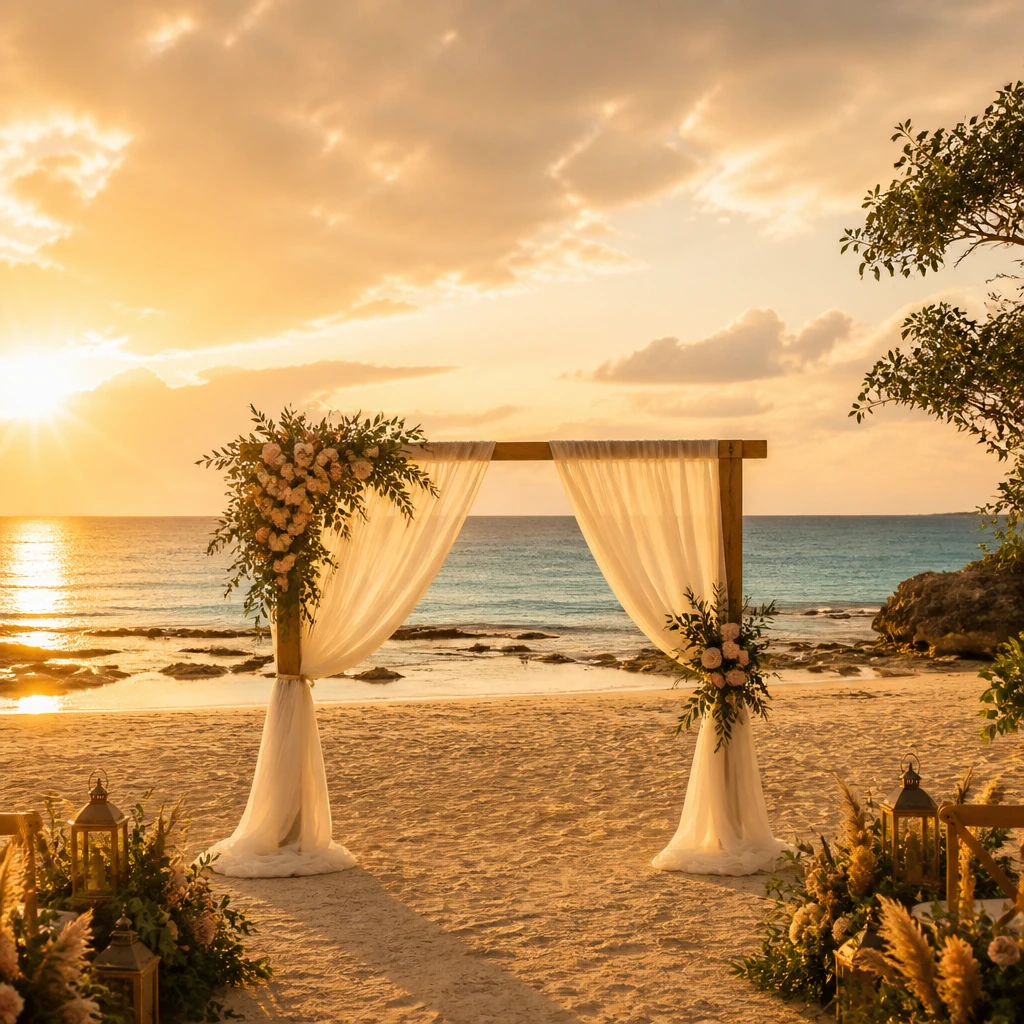
If your wedding is in Mombasa, Diani, Malindi, Watamu, or anywhere along the Kenyan coast, let the ocean lead the design. Think soft whites, aqua and turquoise accents, sandy neutrals, and photography full of light and breeze. The website copy can be light and warm — "join us by the Indian Ocean" — and the schedule can gently acknowledge the coastal rhythm. This theme works beautifully for both a beach ceremony and a hotel reception. Guests who are travelling to the coast will appreciate a dedicated travel section with arrival tips.
Idea 2: Upcountry Charm
An upcountry wedding — in Nyeri, Meru, Kericho, Kisii, Nandi, or any of the beautiful highland towns — deserves a website that reflects rolling green hills, tea plantations, cool air, and hospitality. Use deep greens, cream, and warm wood tones; let your photos show the landscape you love. A lovely touch is a section explaining the location to city guests: what to expect weather-wise, the drive times from Nairobi or other cities, and accommodation suggestions. It is practical information wrapped in genuine warmth.
Idea 3: Modern Minimalism
For the city couple — sleek, busy, design-conscious — minimalism is a statement in itself. A clean white background, one or two colours, strong typography, generous whitespace, and an excellent single photograph. The copy is short and confident. This style photographs well, loads instantly on any phone, and ages gracefully. The risk is feeling impersonal, so let the photos and a short, well-written story carry the warmth.
Idea 4: Bold African Prints, Done With Intention
Ankara, kitenge, and kanga fabrics are beloved across Africa, and using their colours and patterns on your website can be stunning — provided it is done with intention. Pick one pattern or colour family and use it as an accent: a header band, a button style, a border on photos. Pair it with clean layouts so the pattern feels curated, not overwhelming. Remember that "African prints" are not one thing; if your family has a specific textile tradition — such as specific beadwork colours or fabric patterns in your community — reference those specifics rather than a generic pattern. This makes the design personal instead of decorative.
Idea 5: The Storybook Wedding
If you and your partner love telling stories, build the website around yours. A "How We Met" section that is genuinely fun to read, a timeline of your relationship (first date, first trip, the proposal), quotes from friends and family, and a photo timeline that guests can scroll through. This idea works best when the copy sounds like you — write it yourselves, in your own voices, and let it be imperfect and human.
Idea 6: Faith-First Design
For many Kenyan couples, the church or mosque is the heart of the wedding. A faith-first website uses reverent colours, meaningful imagery, and scripture or verses that anchor the couple. The schedule leads with the religious ceremony, and the copy carries a tone of gratitude. This is a deeply personal design choice — make it with your families, and ensure the platform lets you customise typography and colours to achieve the quiet elegance this style needs.
Idea 7: The Grand Family Affair
When the guest list is five hundred and the wedding involves several family committees, the website should project organisation and warmth. Structure matters more than flair: a clear event list, a simple RSVP, and an information section that answers everything. A subtle, formal colour scheme (navy and gold, burgundy and cream) gives it gravitas. Include a note of thanks to the families and the committees that made the wedding possible — on a grand family wedding, those acknowledgements mean a great deal.
Idea 8: Adventure and Outdoors
Did you meet on a hike up Mount Kenya, at a safari, or on a road trip across the country? An adventure theme uses earthy tones, landscape photography, and language like "the start of our greatest journey." The website can feature a map of places that matter to you as a couple — with a lovely payoff when the wedding venue is revealed as another stop on that map. This theme has natural energy and photographs spectacularly.
Idea 9: Black-Tie Elegance
For a formal city wedding, go full black-tie: charcoal, gold, deep emerald, or burgundy; serif typography; refined photography. The website should feel like the front page of a premium magazine. Keep every detail exact — this style rewards precision. Dress code guidance, parking and security notes, and a polished FAQ complete the experience. It is formal, but the copy should still sound like you: elegance with warmth.
Idea 10: The Fusion Wedding
Many Kenyan weddings genuinely are two cultures meeting — maybe both of you are Kenyan but from different communities, or one of you is from another country. A fusion website celebrates both: two colour palettes, two stories, and a schedule that honours both traditions side by side. This is where the platform's flexibility matters most — you need themes, colours, and typography you can blend freely, and space to explain each tradition respectfully to guests who may be unfamiliar with it.
Idea 11: The Nostalgia Album
Vintage-inspired design — soft sepia tones, classic typography, polaroid-style photo frames — can be charming, especially for couples who love family history. Include childhood photos alongside engagement photos, and if you like, a section honouring parents and grandparents. Nostalgia themes work well at Kenyan weddings because family history is such a central part of the celebration. Keep the layout simple so the warmth of the photos does the work.
Idea 12: The Interactive Experience
For the tech-loving couple, add interactive touches: a guestbook where guests can leave voice notes or messages, a live countdown to the ceremony, a poll for the first dance song, or an interactive map of the wedding weekend. These features make the website feel alive and give guests a reason to return to it. They also create lovely keepsakes — the messages guests leave become part of your wedding story.
Content Ideas: What to Write on a Kenyan Wedding Website
Beyond the standard sections, here are pages and details that Kenyan couples specifically find useful:
- The "Who's Who" page. In a wedding with several events and many moving parts, guests appreciate knowing who to ask about what — the RSVP manager, the transport coordinator, the person handling accommodation.
- A guide to the traditional ceremony. If some guests are unfamiliar with your community's customs, a short, respectful explainer (written with family input) turns confusion into participation.
- Dress code per event. The traditional ceremony may call for specific attire, while the reception is more relaxed. State it clearly per event.
- Parking and transport. Real, specific information: where to park, whether shuttles run, who to contact.
- A "what to bring" note. For some ceremonies, guests are expected to contribute in specific ways; your family can advise on how to phrase this gracefully.
- Children's arrangements. Whether children are welcome, and whether there will be entertainment for them, helps parents plan.
- Live updates. A simple note that the website will carry any changes during the wedding week — and a place where you post them.
Design Tips That Apply to Every Idea
Whatever direction you choose, these rules hold:
- One strong visual anchor. Let the hero image carry the emotion; don't crowd the top of the page.
- Two or three colours maximum. Decide the palette and be disciplined.
- Readable type. Elegant fonts for headings, clean fonts for body text, generous size on mobile.
- Fast photos. Compress images so the page loads quickly on ordinary connections.
- Test on WhatsApp. Most of your guests will arrive via the link in a WhatsApp message. Make sure that journey is seamless.
Bringing the Idea to Life
Once you have chosen a direction, the build itself should be quick. A dedicated platform like My Joyfullday lets you pick a theme, apply your photos, adjust colours and typography, and structure the events — all without code. If you prefer creating through conversation, its WhatsApp-based creation (through the Clara assistant) lets you describe what you want and assemble the site in short bursts. Add your RSVP tracking, maps, schedule, and registry, and the site is ready to share.
The ideas in this article are starting points, not rules. The website that will feel most like home is the one that reflects who you actually are — your story, your communities, your corner of Kenya. Choose the elements that make you smile, build them with care, and let the website do what it is for: making every guest feel welcomed, informed, and excited to celebrate with you.
Frequently Asked Questions
| What should be the first page of my wedding website? | The hero: your names, the date, and one great photo. Then an invitation line, and navigation to the events, story, and RSVP. |
|---|---|
| How many sections should a wedding website have? | Enough to answer every likely guest question: story, events, travel, accommodation, RSVP, registry, FAQ, gallery. A focused site of eight to ten sections is typical. |
| Can I change the theme after building? | On most platforms, yes, though you may need to adjust colours and photos. Decide your direction early — it saves rework. |
| Should the website be in English or Kiswahili? | Write in whatever your guests will most comfortably read. Many couples use English with Kiswahili phrases, or provide both; some add a note in the language of their community's ceremony. Clarity beats strict consistency. |
| Is it okay to mix ideas from different themes? | Absolutely. The twelve ideas here are ingredients, not recipes. Most of the best wedding websites combine two or three. |
| How do I make the RSVP prominent? | Repeat it: a button in the hero, a button in the navigation, and a full section. Guests RSVP when it is effortless. |